
- 赛盾供应安全挂绳
- 贝迪投资管理(上海)有限公司
0询价面议
- 上海达克泰提供防坠落产品
- 上海达克泰集团
0询价面议
- 供应梯台平台
- 上海安进投资管理有限公司
0询价面议


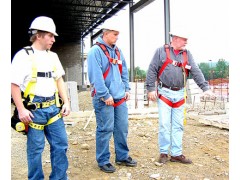
| 价格 | 面议 |
| 发货 | USAPennsylvania |
| 该产品库存不足 |
The Occupational Safety & Health Administration, commonly known as OSHA, publiSHEs what are know as "Standards". These Standards outline what the legal responsibility of the Manufacture, the Employer and the worker are. The Standards are Law. Failure to follow these Standards may result in OSHA citations and fines.
Find more information on OSHA Standards here: www.osha.gov
The American National Standards Institute is a private, nonprofit organization founded in 1918 which facilitates development of voluntary standards. These standards are not law.
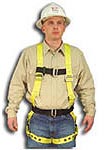 Harnesses
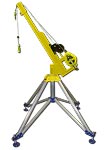 Harness Accessories & Options
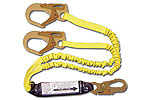 Lanyards /
 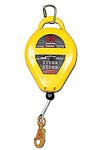 Retractable Lifelines
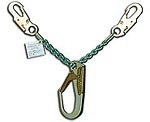 Rebar Assemblies / Positioning / Restraint
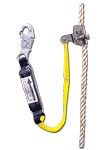 Rope Grabs / Vertical Lifelines / Rope
 Horizontal Lifelines
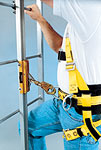 Ladder Climbing Systems
 Roofing Kits
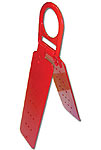 Anchors / Carabiners / HooksRescue / Recovery / Confined Space Systems
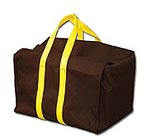 Carry Bags /
 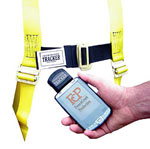 The Tracker
 Miscellaneous
FCP's new training programs are designed to provide awareness, while assisting your company in creating and maintaining a safe and productive work environment. Fall Protection and Confined Space / Rescue training is a necessary and imperative component to a well rounded safety program. Having the proper safety equipment is the first step to safety. The next step is to learn how to properly utilize and care for the safety equipment you have wisely invested in, but don't stop there! It is also necessary for your workers to be trained in recognizing safety hazards, evaluating those hazards, and taking all necessary measures to rectify or protect themselves in the existing work environment.
FCP's field experienced, professional trainers will come to you. We are willing to work with you on-site, or at a location of your convenience, to ensure the best possible training for your company.

A few of the training courses
provided include:
A well conceived fall protection plan must include proper care and maintenance of all personal protective equipment along with the associated items necessary for a complete system. Training sessions related to care and maintenance should be held at regular intervals depending on the nature of the work. Frequent training sessions are more appropriate for an employer with a transient work force than for an employer with a mature stable work force.
ANSI and OSHA standards require that training be performed by a competent person. The user is responsible for ensuring that he/she knows how to properly inspect, use, store and maintain the equipment.
Personal protection equipment (harnesses, lanyards, etc.) along with connectors and other related items should be stored in a clean, dry environment free from direct sunlight, dust, excessive heat and harmful chemicals.
Personal protection equipment should be cleaned periodically using a mild detergent and water. Wash with a soft, non-abrasive brush or sponge and allow to air dry after removing the excess water with a dry cloth.
DO NOT put personal protection equipment in a clothes dryer or use a blow dryer. Excessive heat may melt the webbing and alter the strength.
DO NOT use chemicals to clean heavily soiled gear. Chemicals may destroy the webbing.
Personal fall arrest systems should be inspected by the user before each use. In addition, the user should check before each use to be sure a formal inspection has been performed within the last six months.
Personal fall arrest systems must be inspected by a competent person at intervals of no more than six months.
Harnesses, lanyards and synthetic lifelines manufactured from webbing and/or rope (products used in typical fall arrest system).
When inspection in accordance with stated inspection procedures reveals signs of inadequate maintenance, the harness must be immediately removed from service. Excessive wear and aging are generally not repairable. If detected, immediately remove harness from service. For final disposition, submit the harness to a competent person who is authorized to perform inspections. Contact FrenchCreek Production for further information if necessary.
The personal protective equipment must be inspected by a competent person other than the user at intervals of no more than six months (The qualifications of a competent person are established by OSHA). If the harness is exposed to sever working conditions, more frequent formal inspections may be required. The frequency of inspection by a competent person should be established by the user's organization based on such factors as the nature and severity of the workplace conditions and exposure time of the equipment. The competent person should perform the inspection following the procedures outlined above. Results should be recorded in the formal inspection log. In addition, the user should check before each use to be sure a formal inspection has been performed within the last six months.
The user's organization should establish and enforce a policy and procedure whereby any personal fall arrest system (or parts thereof) are found to be defective, damaged, impact loaded or in need of maintenance be immediately removed from service. Only the manufacturer should make repairs to defective or damaged equipment.
FrenchCreek Production does not manufacture, nor do we suggest the use of a body belt only as a component of a fall protection system.
A fall arrest system may include but is not limited to the following products:
A work positioning system is designed to hold a worker in place while giving a hands free approach to his work. A work positioning system must include a secondary system for fall arrest in the event the work positioning system should fail. The following items make up a work positioning system:
A suspension system is designed to lower and/or raise a worker and support the worker while in that position. Examples include a suspended scaffold or a Bos'n chair supporting a worker on the facade of a building, bridge, etc. The worker must be protected against falling should the work platform fail for any reason. The following are items that make up a suspension system. Your individual suspension system may vary depending upon the work being performed.
A retrieval system is designed to raise and/or lower workers into and out of confined spaces. The worker should be attached to a retrieval system prior to entering a confined space. If an accident occurs, the worker may be pulled to safety by his retrieval system. Retrieval systems are an important element involved with a rescue, and consideration should be given to the time element involved with the rescue equipment. The following items make up a retrieval system. Your individual retrieval system may vary depending upon the needs of your employees.